Kool Deck Repair & Cool Deck Repair: Warning Signs and What the Process Involves
Cracking, flaking, and hot spots on your pool deck usually mean it's time for Kool Deck or Cool Deck repair. Here's how to tell, what the repair process actually involves, and when repair beats a full resurface.
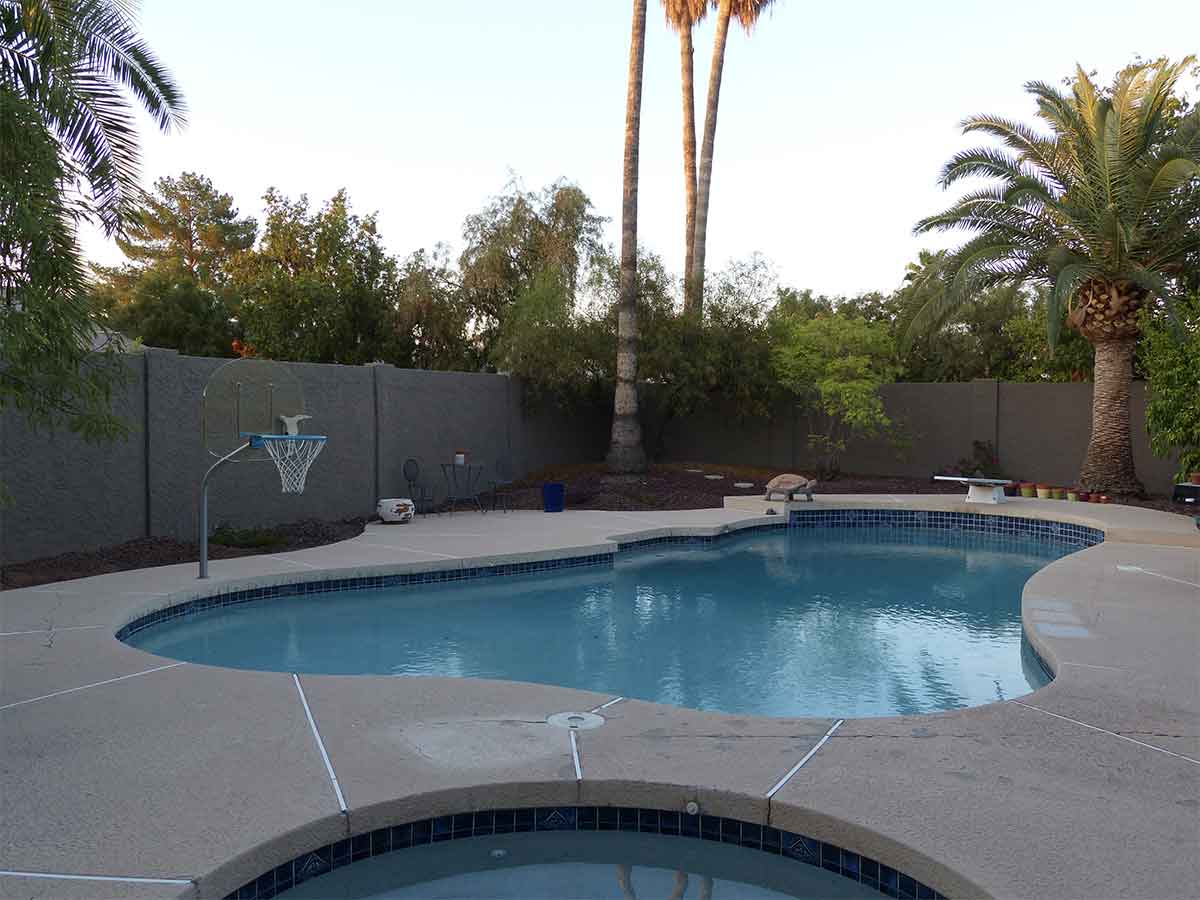
Signs Your Pool Deck Needs Kool Deck or Cool Deck Repair
Kool Deck and Cool Deck are two names for the same idea: a textured, light-colored cementitious coating troweled over concrete around a pool to keep the surface cooler and less abrasive than bare concrete. Over years of Arizona sun, pool chemicals, and foot traffic, that coating ages the same way any exterior finish does.
The most common signs it needs repair rather than just a cleaning:
One or two hairline cracks in an otherwise sound deck is a different situation than delamination across a large section. The extent and cause of the damage are what determine whether repair or a full resurface makes sense — see the comparison further down.
What to look for on a failing deck
- Spiderweb or straight-line cracking that follows the slab's control joints or runs across open sections
- Flaking, chalking, or a sandy texture that comes off on bare feet
- Discolored or darkened patches, often near the waterline or where sprinklers hit the deck
- Hollow-sounding spots when tapped, which usually means the coating has delaminated from the concrete underneath
- Chipped or spalled edges around drains, coping, or expansion joints
- Surface that feels noticeably hotter in one area than the rest of the deck
Looking for Kool Deck Repair & Cool Deck Coatings in Phoenix?
Keep your bare feet more comfortable in Arizona heat with a textured system selected around the surface, exposure, and use. Don't deal with chipping retail materials—get commercial reliability backed by our written warranty.
What Causes Kool Deck and Cool Deck Damage in Arizona
Most failures trace back to a handful of causes, and they're rarely just "old age":
Knowing the cause matters because it changes the repair. A crack from slab movement needs joint work and crack isolation, not just a cosmetic patch — patching over an active crack without addressing the movement underneath it just means the same crack reappears.
- UV and heat cycling: summer surface temperatures and constant expansion/contraction stress the coating and the joints beneath it
- Pool chemicals and hard water: splashed chlorine, salt systems, and Arizona's mineral-heavy water etch and stain the surface over time, especially near the waterline
- Slab movement: expansive soils and settling can crack the underlying concrete, and that crack telegraphs straight through the coating above it
- Moisture intrusion: once water gets under a cracked or chipped section, it undermines adhesion from below, which is why small chips often turn into larger delaminated patches
- Age and original installation quality: classic troweled Kool Deck and modern acrylic lace systems both have a realistic service life, and how the original substrate was prepped affects how long that life actually is
How Professional Kool Deck Repair Works
A proper repair isn't a bucket of patch mix troweled over the bad spot. It follows a sequence:
The goal on a repair is a patch that matches the surrounding texture closely enough that it doesn't read as a patch. That blend depends on matching the existing product, color, and trowel technique, which is easier the sooner a small crack gets addressed rather than left to spread.
The repair process, step by step
- High-pressure wash to strip chemical residue, body oils, mold, and scale out of the existing texture
- Inspection to map cracking, delamination, and hollow spots, and to confirm the cause before choosing a fix
- Removal of failed or delaminated coating back to sound material, so the new patch has something solid to bond to
- Crack isolation and joint work — routing and filling active cracks so slab movement doesn't telegraph straight back through
- Patching and re-texturing to blend the repaired area with the surrounding deck's pattern and color
- A protective topcoat where the system calls for it, to help the repaired section resist chemicals and UV going forward
Repair vs. Full Resurfacing: How to Tell Which You Need
Most decks fall into one of these situations, and each one points toward a different fix.
An inspection is what actually settles this — the list above is a starting point, not a substitute for someone looking at the slab. If a deck needs more than a couple of scattered repairs, a full resurface often ends up more cost-effective than chasing patches one section at a time, and it gives you uniform color and texture across the whole deck.
Match your deck's condition to the likely fix
- A few isolated cracks or chips with the rest of the coating sound: usually a spot repair
- Cracking or delamination scattered across most of the deck: usually a full resurface
- Damage concentrated in one zone, like the waterline or a high-traffic path: spot repair, sometimes paired with a full reseal for uniform color
- Coating intact but faded, stained, or holding more heat than it used to: a reseal or recoat rather than a structural repair
- The same spots have already been patched more than once: usually a full resurface, since repeat failure in one area means the underlying cause was never fixed the first time
Why DIY Kool Deck Repair Usually Doesn't Hold Up
Patch kits sold for pool decks can hide a small chip for a season, but a few things make DIY repairs prone to failing again:
None of that means every repair requires a professional — small cosmetic touch-ups on a sound deck are reasonable to try. It's delamination, structural cracking, and repeat failures in the same spot where a proper diagnosis and prep sequence make the difference between a repair that lasts and one you're redoing next summer.
- Getting the trowel texture to match surrounding Kool Deck or acrylic lace takes practice; a mismatched patch is usually visible even when it's structurally fine
- Skipping proper removal of failed coating means the patch bonds to material that's already delaminating, so it fails again from underneath
- Active cracks from slab movement need to be isolated, not just filled — a rigid patch over a moving joint cracks again
- Color and product matching between what's currently on the deck and what's available retail is hit or miss
What Kool Deck Repair Costs
Repair pricing depends on the extent of cracking, how much delaminated coating has to come out, drainage and access, and whether the fix is a few isolated patches or coverage across most of the deck. For the cost drivers and line-item ranges we can share publicly, see our guide to Kool Deck and Cool Deck repair cost in Arizona.
Keeping a Repaired Deck From Cracking Again
Once a section is repaired, a few habits extend the life of the fix: rinsing off chlorine and salt residue instead of letting it dry on the surface, keeping sprinklers from hitting the deck directly, and resealing on the interval documented for the installed system rather than waiting for visible fading. A deck that's resealed on schedule generally shows fewer new cracks than one left to weather until it's obviously failing.
Get Your Pool Deck Evaluated
If your deck has cracking, flaking, hollow spots, or hot patches, the fastest way to know whether you need a repair or a full resurface is an on-site look. Request an estimate with a few photos of the affected areas, and we'll tell you honestly which one your deck needs. You can also see the full scope of what's involved on our Kool Deck Restoration service page, or compare it to new acrylic deck installation if your existing deck is beyond repairing.
More Pool Deck Systems Articles

Jeff Newcombe
Owner & Lead Coatings Specialist
Jeff Newcombe is the owner of Carefree Stone. For over 40 years, he has helped Arizona homeowners and business owners transform their concrete surfaces with high-performance epoxy garage flooring, Kool Deck pool deck restoration, and custom resinous overlays tailored for the desert climate.
Learn more about Jeff →Speak to an Estimator Today
Stop guessing what will actually hold up. Let us bring commercial performance to your project.